What is tawaf?
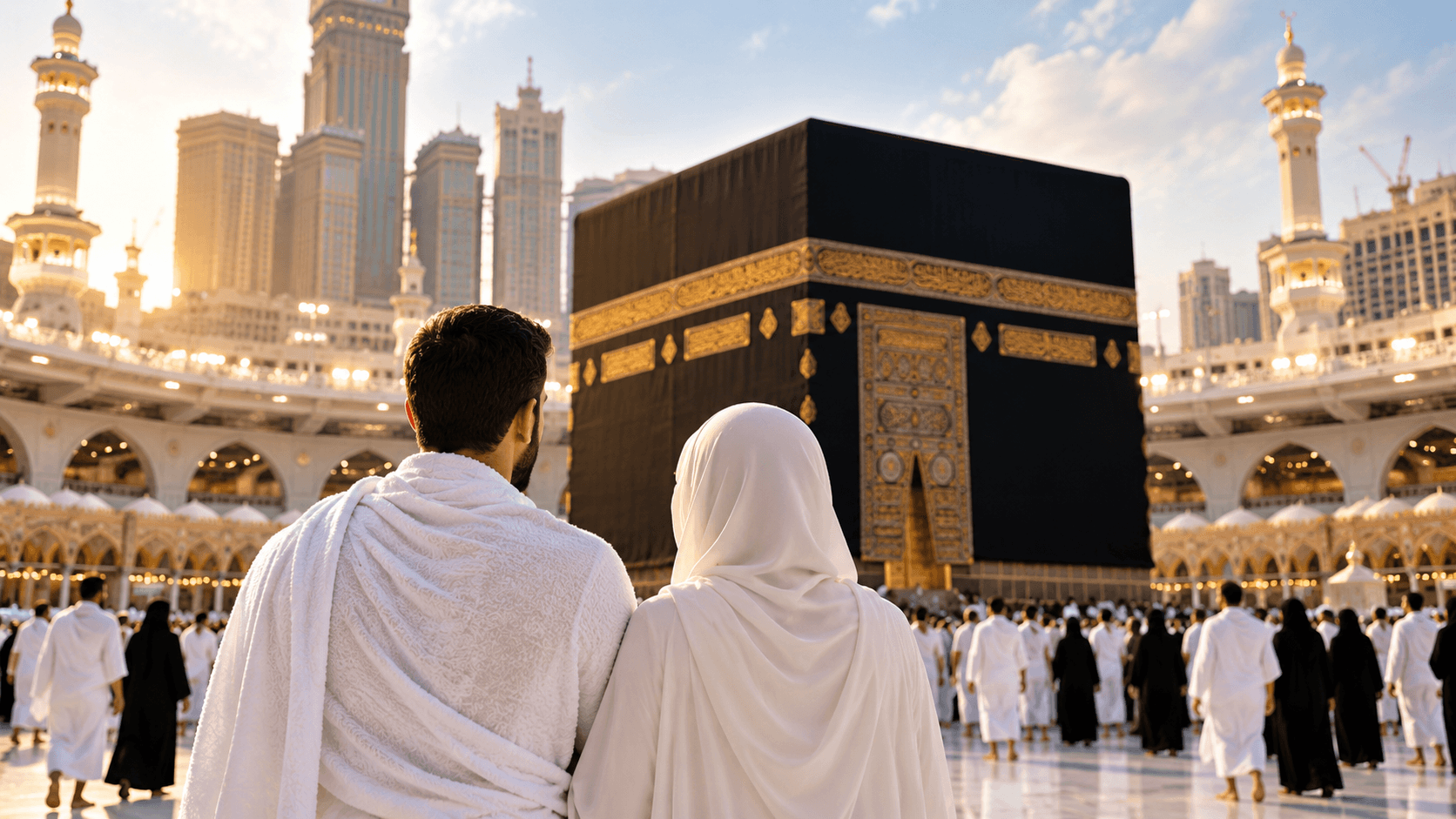
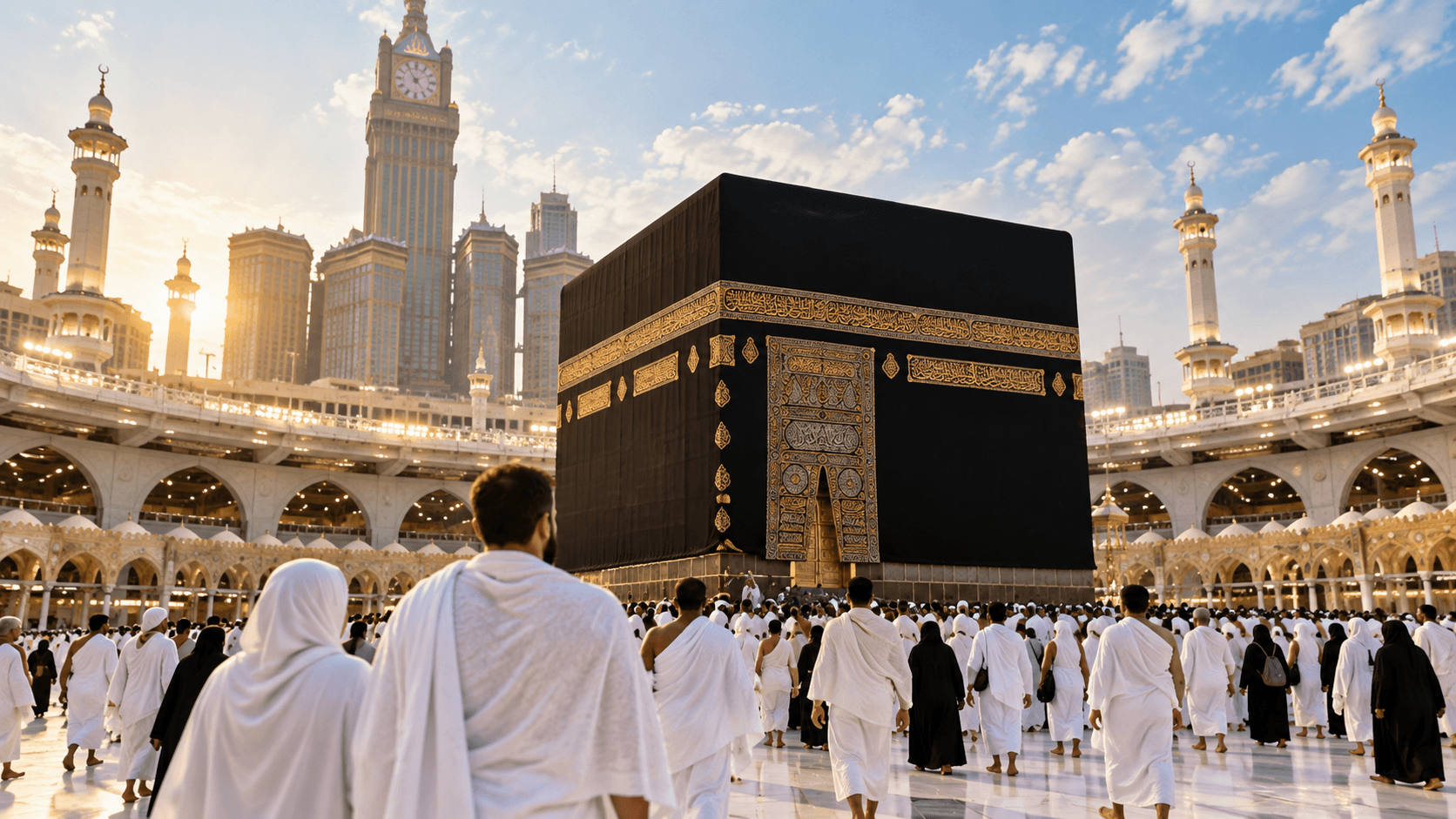
Tawaf is to begin from the corner of the Black Stone, keep the Kaaba on the left and circle seven times. Each circuit is a shawt; seven shawts make one tawaf. The action is the same; the difference is intention. Umrah tawaf, the tawaf of visiting, the farewell tawaf, a voluntary tawaf — all are seven circuits, distinguished by intention.
The tawaf of visiting, a pillar of Hajj, is not the subject of an Umrah page; it is taught in the Hajj group.
Wudu, covering and remaining inside the mosque are among the classical conditions. Greeting the Black Stone, by hand or gesture if possible; harming people in a crush is not part of the pillar. Idtiba and ramal (for men, the shoulder and pace in the first three circuits) are sunnah, not loaded onto the elderly.
After tawaf, two rak’ahs near the Station of Ibrahim if possible; a suitable place in a crowd. Zamzam is a memory of tawaf, not a bottle collection.
Sa’y
Sa’y is seven lengths between Safa and Marwah. God has made sa’y required for those who perform Hajj and Umrah, in remembrance of Hajar’s obedience. At Safa one faces the qibla and supplicates; between the green lights men walk a short, quicker pace; it ends at Marwah.
In most views sa’y comes after tawaf. A long shopping trip between the two tires you and strains wudu.
Manners in a crowd
Filming from the floor, shouting names so as not to lose the group, standing in a wheelchair lane — these bruise the worship. If you are lost, the mosque door and hotel name the teacher gave are enough. A child’s hand is held; the Haram is not a playground.
Upper-floor tawaf, wheelchairs and where to find zamzam are left to the teacher’s sentence in the field. In the seminar we walk it once, slowly.
Questions: +90 531 929 16 34. Do not live the first tawaf only as something to “achieve”; the group carries you.